20 May 2026
The Journal — Aurum & Isle — Jewellery for Sensitive Skin — A Complete Guide
Jewellery for Sensitive Skin — A Complete Guide
May 20, 2026 | Aurum & Isle
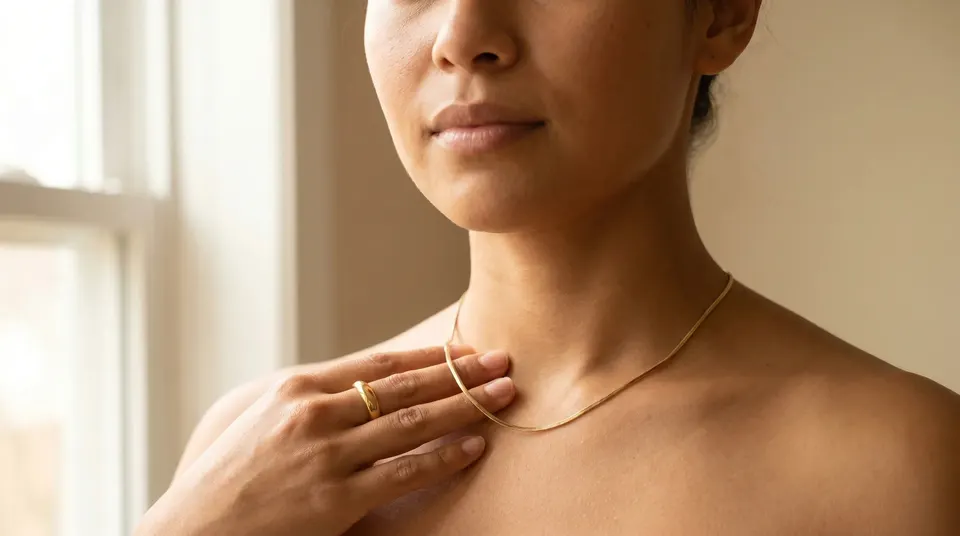
If your skin reacts to jewellery often, you have probably heard conflicting advice. Buy gold. Avoid cheap metal. Try hypoallergenic brands. But most of that advice is too vague to be useful. The real question is not about price or brand name. It is about what the jewellery is made of and how your skin reacts to it.
In affordable jewellery, the most common irritant is nickel. Nickel is a metal alloy added to strengthen base metals and add shine. It is cheap, effective, and present in most fashion jewellery sold in India. It is also one of the most common skin allergens in the world. If your ears itch after wearing studs or your wrist turns red under a bracelet, nickel is the most likely reason.
This guide covers what causes jewellery-induced skin reactions, which materials to buy and which to avoid, and how to shop smarter if your skin is sensitive.
What causes jewellery to irritate skin?
The short answer is metal allergy, usually to nickel. When jewellery contains nickel and sits against your skin for hours, sweat and friction can leach tiny amounts of nickel ions into the skin. For people with nickel sensitivity, this triggers an allergic contact dermatitis reaction — redness, itching, swelling, or a rash in the exact shape of the jewellery contact area.
Not everyone reacts to nickel. But if you do, the reaction has nothing to do with whether the jewellery is expensive or cheap. A ₹2,000 nickel-containing piece can irritate your skin just as much as a ₹200 one. The material is what matters, not the price.
Other common triggers include cobalt, copper (especially in alloys), and some plating finishes that wear down over time and expose the reactive base metal underneath.
Which jewellery materials are safest for sensitive skin?
Here is a quick comparison to help you decide what works for your skin.
Material
Safe for sensitive skin?
Notes
Stainless steel (304, 316L)
✅ Yes
Low nickel content, widely considered hypoallergenic. 316L medical-grade is best.
Titanium
✅ Yes
Completely nickel-free, biocompatible, very durable.
Niobium
✅ Yes
Naturally hypoallergenic, often used for piercing jewellery.
Platinum / Palladium
✅ Yes
Noble metals, very low reactivity, but high cost.
Anti-tarnish coated alloy (nickel-free)
✅ Yes
When the coating is intact and the alloy is confirmed nickel-free, it is skin-safe for daily wear.
Silver (sterling 925)
⚠️ Mostly
Contains some copper alloy — rare reactions, but possible with prolonged wear.
Gold (14-24K)
⚠️ Mostly
Higher karat gold is purer, so less reactive. 24K is safest, but soft.
Gold-plated / Gold-filled
⚠️ Conditionally
Safe while plating lasts. Once worn through, the base metal (often brass with nickel) can cause reactions.
Copper / Brass
❌ Risky
Common skin irritants, especially with moisture and heat.
Nickel-containing alloys
❌ Avoid
Most common cause of jewellery allergy. Check labels carefully — many fashion pieces use nickel in the base.
If you have sensitive skin, the safest jewellery material is one that is confirmed nickel-free and made with stable, non-reactive metal — ideally stainless steel, titanium, or anti-tarnish coated alloy with proven nickel-free formulation.
How nickel-free jewellery helps sensitive skin
Nickel-free jewellery is not a marketing gimmick. It is a genuine material difference. When a piece is manufactured without nickel in the alloy or the plating, the risk of allergic contact dermatitis drops dramatically.
That is why brands that position around nickel-free and skin-safe daily wear are a better bet for sensitive-skin buyers than brands that describe jewellery using vague terms like premium or fashion quality. The material claim is verifiable. The vague terms are not.
This is where Aurum & Isle's current catalogue fits. The range uses anti-tarnish coated alloy that is nickel-free and built for daily wear. If you are someone who has stopped wearing jewellery because of constant irritation, that material truth matters more than how the piece looks in a product image.
How to test if your jewellery is causing the reaction
Before replacing your entire jewellery box, try a simple elimination test:
-
Stop wearing all jewellery for 7 days.
-
Let the irritated area heal completely.
-
Wear one suspected piece at a time for 24 hours.
-
Remove it and check for redness or itching after 12 more hours.
-
Repeat with each piece separately.
This method isolates the trigger piece without guessing. You will often find that one or two specific items cause the reaction while others do not. That helps you identify whether it is nickel, copper, or a worn-out plating finish that went bad.
Best options from Aurum & Isle if you have sensitive skin
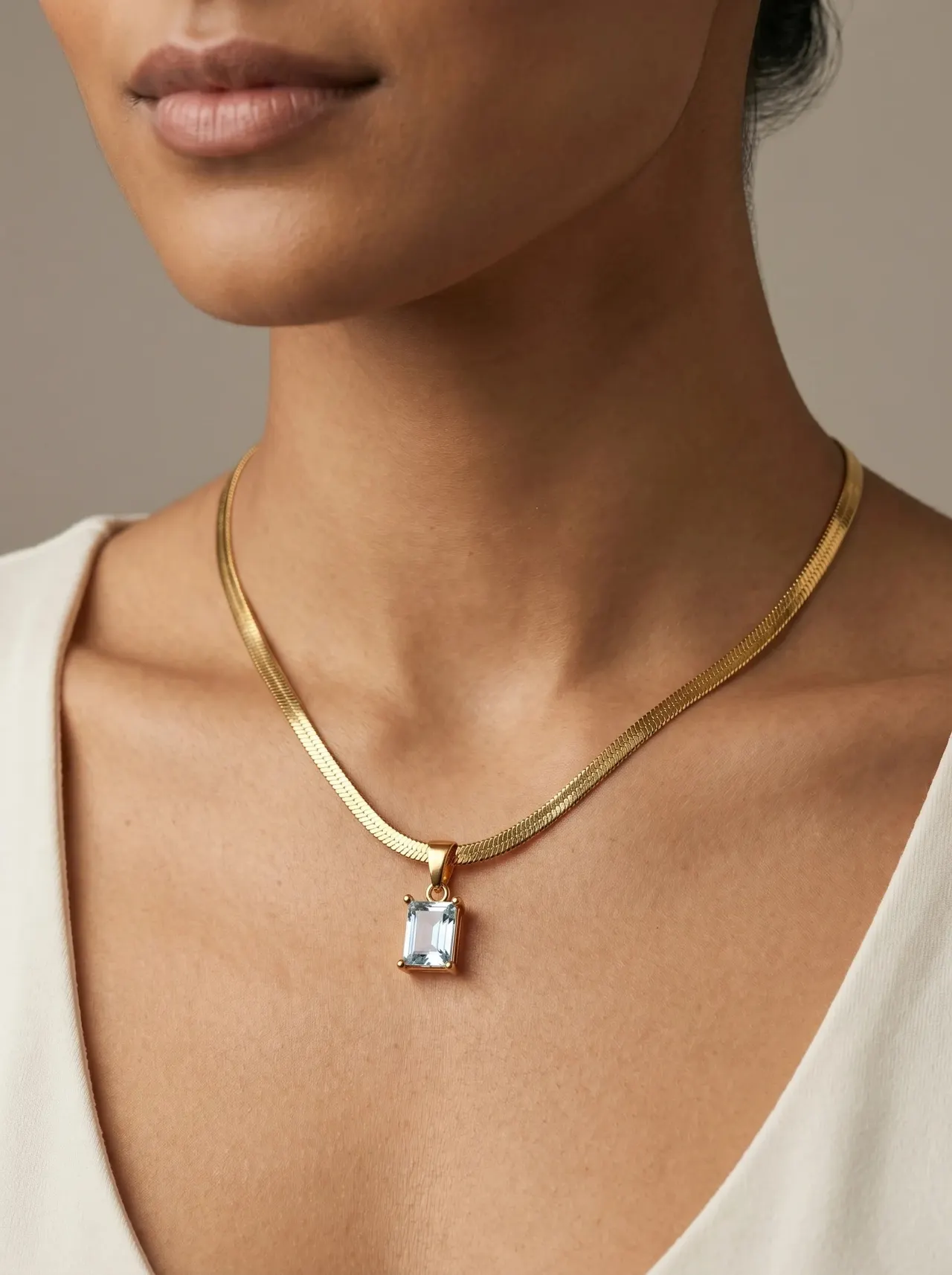
Soleil Snake Chain Pendant — everyday gold for sensitive skin
The Soleil Snake Chain Pendant is the most straightforward daily-wear necklace in the lineup. A clean emerald-cut blue stone on a smooth snake chain. It sits directly on your neck, which is the precise reason material truth matters — and this piece is nickel-free and anti-tarnish coated.
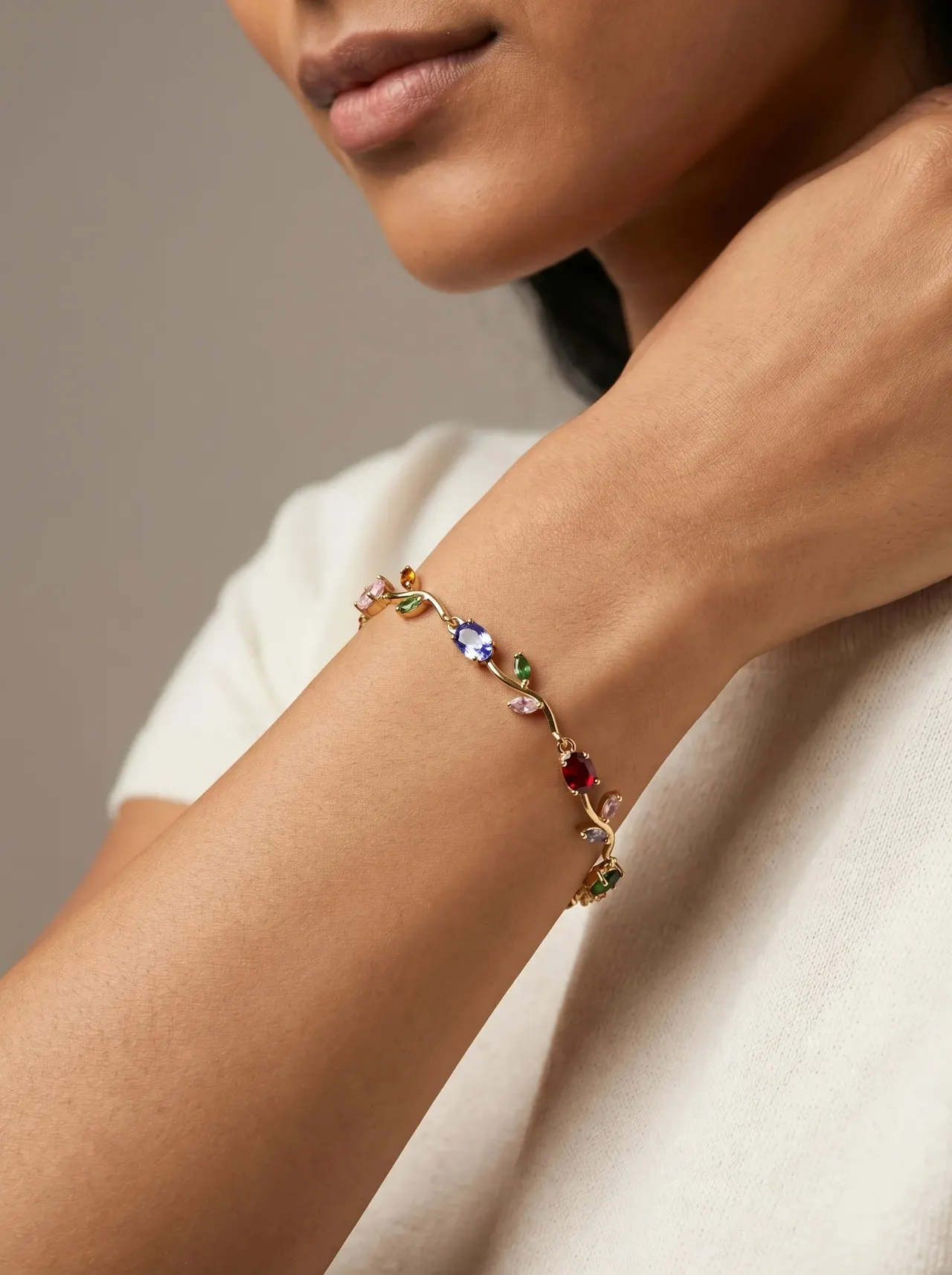
Flora Vine Bracelet — sensitive-skin safe for your wrist
If bracelets tend to cause redness on your wrist, the Flora Vine Bracelet offers vine-inspired detail on a comfortable fit. Nickel-free and anti-tarnish, it avoids the copper-based alloys that typically cause wrist reactions.
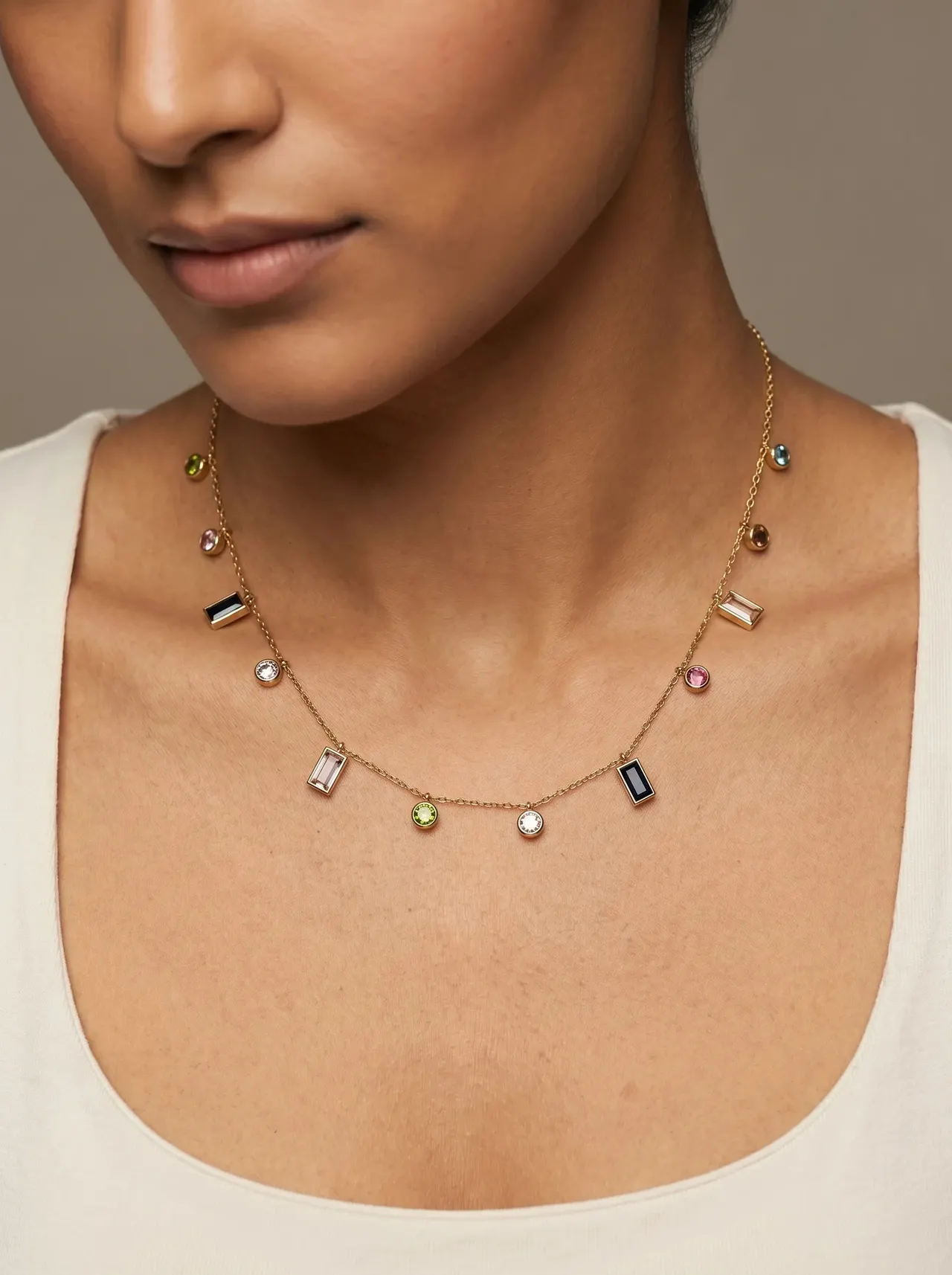
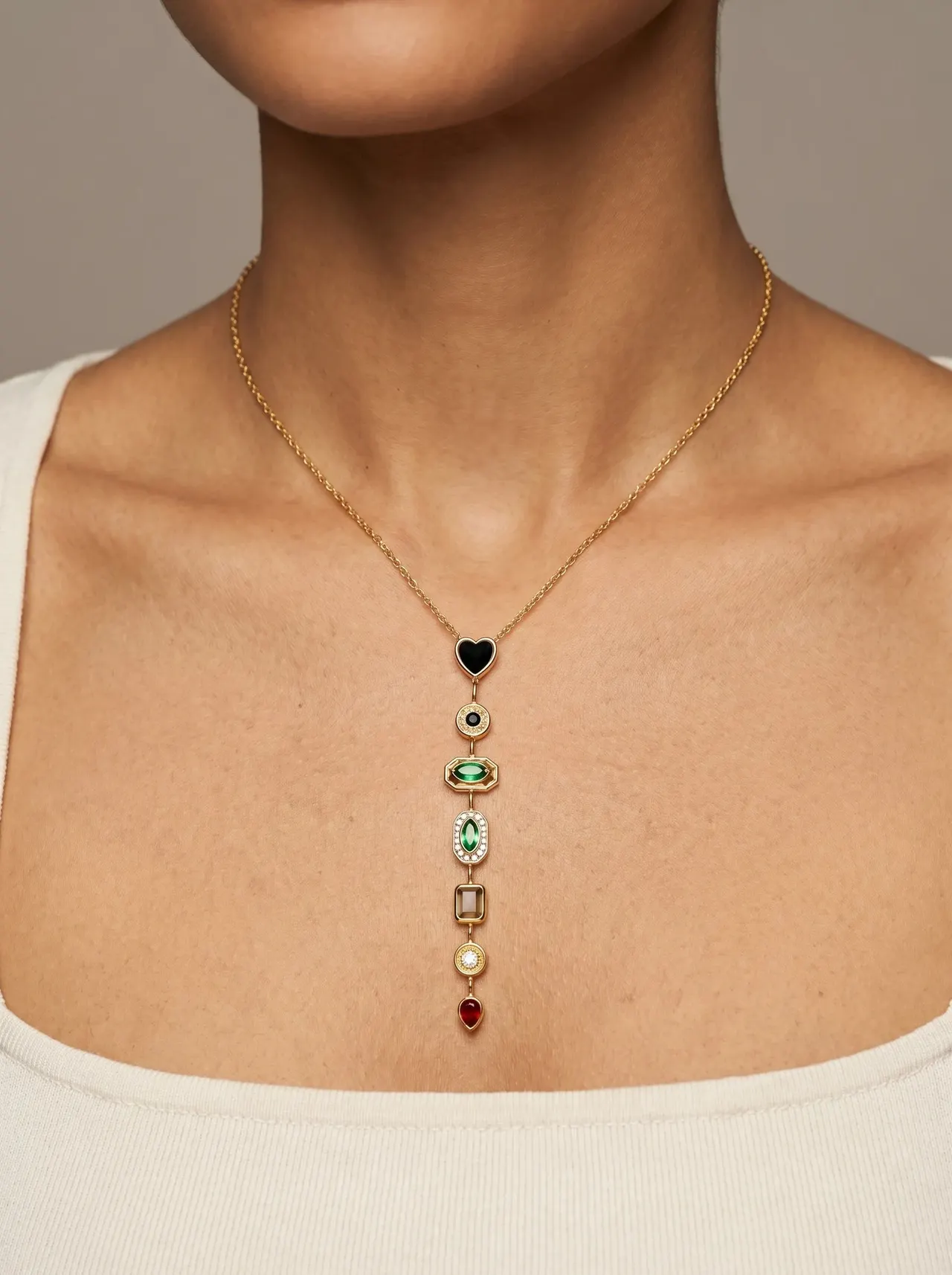
Mosaic Charm Necklace and Éclat Y-Drop Necklace — more styling, same material standard
If you want more visual texture, the Mosaic Charm Necklace and Éclat Y-Drop Necklace give you more detail while staying in the same nickel-free, anti-tarnish daily-wear lane. The guarantee is in the material, not just the silhouette.
If you want to browse by how your skin responds, The Clean Girl Edit is a good starting point. Or head straight to The Full Edit to see the full range.
How to care for nickel-free jewellery so it stays safe
Nickel-free jewellery stays safe only while the coating or finish is intact. Once the protective layer wears down, the base metal beneath can sometimes still trigger reactions depending on the core material.
Five habits that keep nickel-free jewellery safer longer:
-
Remove jewellery before showering, swimming, or working out.
-
Apply perfume, lotion, and sunscreen first — let them dry — then wear jewellery.
-
Wipe jewellery dry with a soft cloth after each wear.
-
Store pieces separately in a pouch or box to prevent scratches that expose base layers.
-
Rotate pieces so no single item gets worn daily for months nonstop.
-
For deeper care, read the Jewellery Care Guide.
When to see a dermatologist
If your skin reaction includes blisters, open sores, swelling beyond the contact area, or does not heal within a few days of removing the jewellery, see a dermatologist. You may have a more serious metal allergy that requires patch testing.
A dermatologist can identify your exact triggers through a standard patch test. Once you know whether you react to nickel, cobalt, or chromium, buying jewellery becomes much simpler — you eliminate entire categories of risk before you even look at styles.
If your skin has been the reason you stopped wearing jewellery as often as you wanted, the material change is the real fix — not the style change. Start with pieces that treat your skin as carefully as your look. Explore The Clean Girl Edit or begin with the Soleil Snake Chain Pendant for a sensitive-skin-friendly start.
Frequently Asked Questions
What is the best jewellery for sensitive skin?
The safest jewellery for sensitive skin is one that is confirmed nickel-free, with a stable finish that does not wear down quickly. Stainless steel, titanium, and nickel-free anti-tarnish coated alloy are the best material choices.
Can nickel-free jewellery still cause a reaction?
Yes, in rare cases. Some people react to other metals like cobalt or copper. But nickel is the most common trigger, so nickel-free jewellery dramatically reduces risk for most people with sensitive skin.
Is Aurum & Isle jewellery safe for sensitive skin?
Yes. The current Aurum & Isle catalogue uses anti-tarnish coated alloy that is nickel-free and built for daily wear. It is designed to be skin-safe and comfortable for regular use.
How do I know if my jewellery contains nickel?
Check the product description for material claims. If it says nickel-free in clear language, you can trust that positioning. If the description is vague or does not mention materials at all, assume nickel may be present.