3 May 2026
The Journal — Aurum & Isle — Snake Chain vs Cable Chain — Which One Should Y...
Snake Chain vs Cable Chain — Which One Should You Buy?
May 3, 2026 | Aurum & Isle
You're buying a chain for daily wear. Two options keep coming up — snake chain and cable chain. They look different, feel different, and behave differently in Indian weather. Here's what actually matters before you pick one.
What is a snake chain?
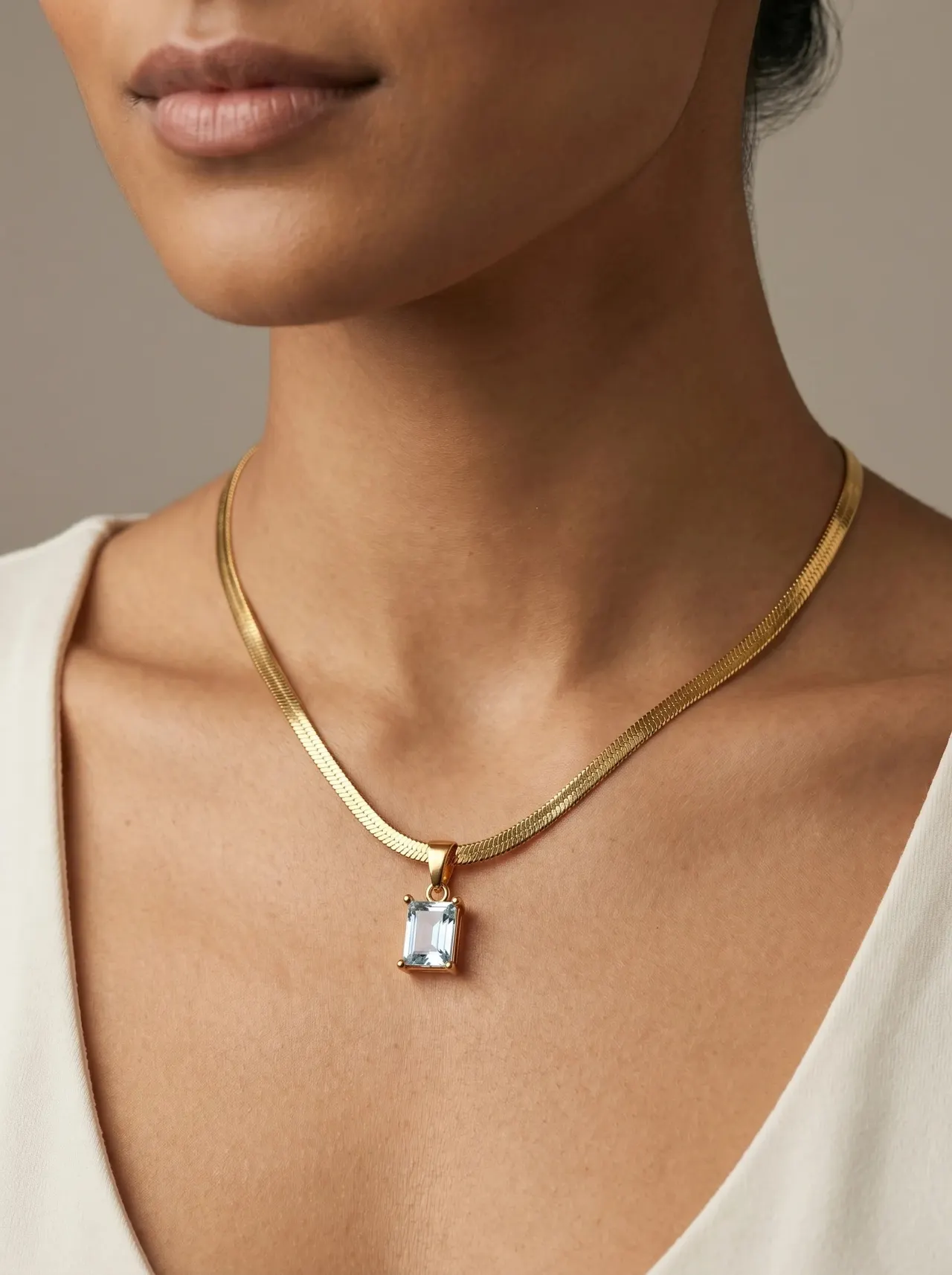
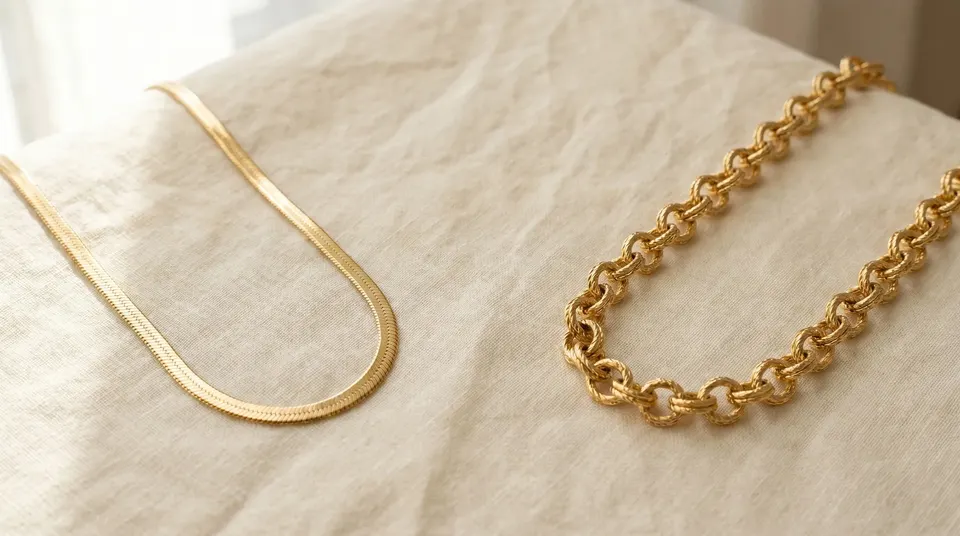
A snake chain is made of tightly linked plates or bands that form a smooth, flexible tube. The surface is flat and almost liquid-looking — it catches light in a way that mimics solid gold at a fraction of the price. In hand, it feels like a single fluid piece rather than individual links. The Soleil Snake Chain Pendant (₹589) uses a herringbone-style snake chain — one of the most popular variants for daily wear because it sits flat against the skin and doesn't catch on fabric.
What is a cable chain?
A cable chain is the classic chain most people picture — round or oval links connected in a uniform pattern. It's the most common chain type globally, used in everything from lockets to bracelets. The individual links create a textured, slightly bumpy surface that reflects light in small, scattered points. Cable chains are sturdy. Each link distributes tension across the chain, making them resistant to kinking or snapping under load.
Snake chain vs cable chain — the real differences
Feature
Snake chain
Cable chain
Surface
Smooth, flat, mirror-like
Textured, round links, scattered light
Flexibility
Fluid — drapes like liquid
Stiffer — holds shape slightly
Tangling
Very low — no loops to catch
Medium — links can interlock
Pendant sitting
Centres naturally
Can slide or bunch
Durability
Moderate — kink risk if bent sharply
High — links absorb tension
Look
Minimal, editorial, liquid-gold effect
Classic, traditional, textured
Repair
Harder — damaged section needs replacement
Easier — individual links can be fixed
Which one works better in Indian weather?
This is where most comparison guides stop being useful. Indian humidity — especially during monsoon from June to September — tests jewellery differently than dry climates. Sweat, rain, and sudden temperature shifts between air-conditioned rooms and outdoor heat all play a role. Snake chains handle sweat well because the flat surface doesn't trap moisture between links. A quick wipe with a soft cloth keeps them clean. Cable chains, with their individual links, can hold moisture in the joints — which accelerates tarnish if the coating is thin or absent. For anti-tarnish coated pieces, both types hold up well. The coating protects the alloy underneath regardless of chain style. But if you're choosing between an uncoated snake chain and an uncoated cable chain, the snake chain will show tarnish later because there are fewer crevices for moisture to settle in.
Styling — which chain for which look
Snake chains lean minimal. They pair best with clean, understated outfits — a kurta set for work, a slip dress for dinner, a plain tee for weekends. The flat surface catches light without competing with your outfit. If your style is clean girl or soft girl, a snake chain is the default choice. Cable chains lean classic. They work when you want the chain itself to be visible — layered over a high neck, paired with a pendant that needs a textured backdrop, or stacked with other chains for a more-is-more look. The links add visual weight that a snake chain doesn't have. The Clean Girl Edit features pieces that match the snake-chain aesthetic — minimal, fluid, gold-forward. If you prefer a more traditional or layered look, the Baddies Edit has pieces with more visual presence.
Snake chain with a pendant — the combination that just works
A snake chain with a pendant is one of the most versatile jewellery combinations for daily wear. The chain's flat surface lets the pendant sit centred without constant adjustment. It doesn't tangle into your hair or catch on knitwear. The Soleil Snake Chain Pendant is built exactly this way — a herringbone snake chain with an emerald-cut blue stone. At ₹589, it's an entry point into the snake-chain format without committing to a higher price point. Cable chains with pendants work too, but the pendant tends to slide more because the round links create friction points. You'll find yourself readjusting it through the day — not a dealbreaker, but worth knowing.
Which chain lasts longer?
Cable chains are structurally more forgiving. If you accidentally pull or snag a cable chain, the links absorb the tension. A snake chain, if bent at a sharp angle, can kink — and a kink in a snake chain is hard to repair without replacing the entire section. That said, for normal daily wear — no yanking, no sleeping in it, no rough handling — both chains last years with proper care. The anti-tarnish coating on Aurum & Isle pieces adds a protective layer that extends the life of either type. The Jewellery Care Guide covers how to store and clean both chain types to maximise their lifespan.
So — which one should you buy?
If you want something minimal, low-maintenance, and modern — go snake chain. It's the chain you forget you're wearing until someone compliments it. If you want something classic, sturdy, and versatile for layering — go cable chain. It's the chain that works in every situation without thinking about it. For most people building a daily-wear jewellery collection under ₹1,000, we'd start with a snake chain. It's the piece that earns its spot fastest — worn daily, stored rarely. That's the point. Explore the Soleil Snake Chain Pendant — ₹589, anti-tarnish, nickel-free, built for everyday wear. ✦
Frequently Asked Questions
What is the difference between a snake chain and a cable chain?
A snake chain has a smooth, flat surface made of tightly linked plates that look like liquid gold. A cable chain has round or oval links connected in a pattern, giving it a textured, classic look. Snake chains tangle less; cable chains are more durable under tension.
Is a snake chain good for daily wear?
Yes. Snake chains sit flat against the skin, don't catch on fabric, and resist tangling — making them ideal for everyday use. They work especially well in Indian weather because the flat surface doesn't trap sweat between links.
Does a snake chain tangle easily?
No. Snake chains are one of the least tangling chain types because their smooth, continuous surface has no loops or links to interlock. This is one of their biggest advantages over cable chains.
Which chain is better for a pendant — snake or cable?
Snake chains hold pendants more securely in place because the flat surface creates less friction. Cable chains work too, but pendants tend to slide and need more readjustment throughout the day.